The era of manually exporting spreadsheets, writing complex SQL queries by hand, and staring at static charts is officially over. Today, business intelligence is driven by artificial intelligence. If you are still relying on legacy data visualization tools, you are likely losing valuable hours—and actionable insights—to competitors who have already adopted AI-driven reporting.
Whether you are managing multi-channel marketing campaigns, analyzing enterprise financial data, or tracking client KPIs, choosing the right platform is critical. In this comprehensive guide, we will compare AI dashboard software features and pricing, analyzing the top tools on the market to help you make an informed, data-driven decision.
By Kyle Cannons, soolisAI | Updated February 19, 2026
What is AI dashboard software?
AI dashboard software is a business intelligence tool that utilizes artificial intelligence, machine learning, and natural language processing (NLP) to automate data analysis, generate real-time reports, and provide predictive insights. Unlike traditional dashboards that only show historical data, AI dashboards allow users to ask questions in plain English, instantly identify performance anomalies, and receive automated recommendations for future strategies.
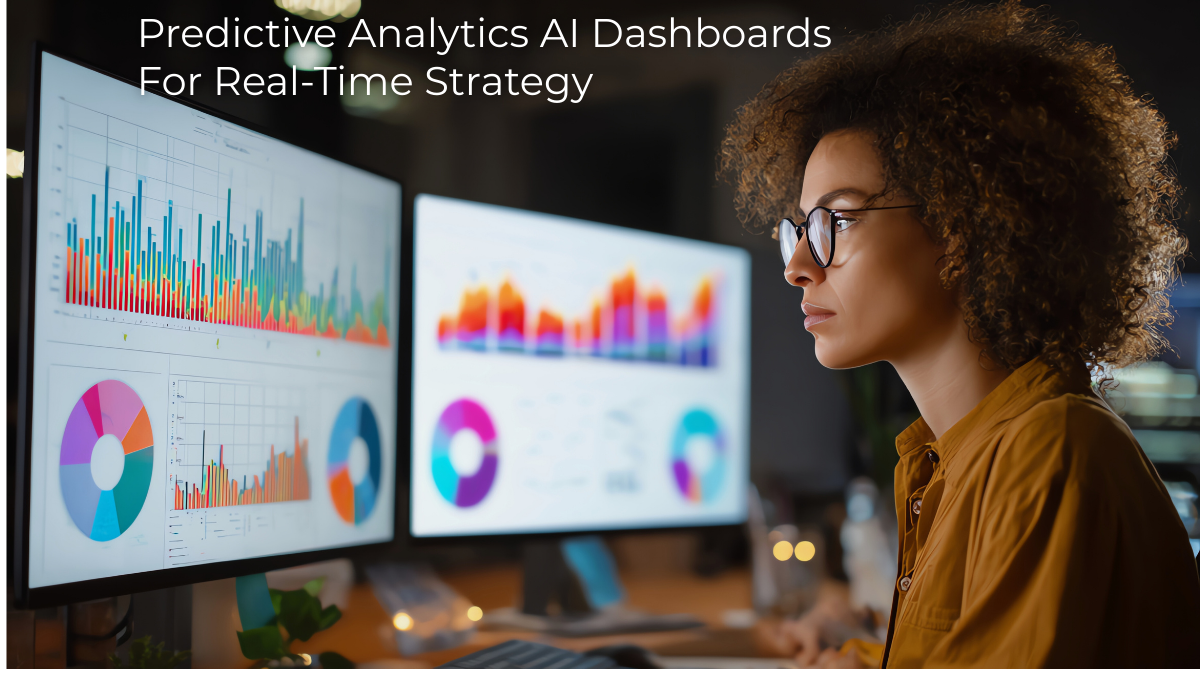
soolisAI Insight Dashboards turn static, historical reporting into real-time, proactive strategy. While old-school dashboards only show what already happened through manual, predefined charts, sooliaAI predictive analytics dashboards reveal what’s likely to happen next—detecting anomalies instantly, delivering forward-looking forecasts, and offering actionable recommendations—all in real time, powered by continuously learning AI. Move from reactive business intelligence to true proactive intelligence and see tomorrow’s opportunities today.
The Evolution of Data: Why Standard Dashboards Are Obsolete
For years, platforms like Google Data Studio (Looker Studio) and standard Tableau dashboards were the gold standard. However, they came with a steep learning curve. You needed data analysts to build the pipelines, design the visualizations, and interpret the results.
Generative AI has completely flipped this model. Today’s top platforms act as virtual data analysts. You can simply type, "Why did our customer acquisition cost spike last week?" and the AI will scan your connected platforms (Google Ads, Meta, Salesforce, etc.), isolate the variables, and generate a visual report with a clear explanation.
This shift from descriptive analytics (what happened) to prescriptive analytics (what we should do next) is the primary reason companies are migrating to AI-powered solutions.
Must-Have Features in AI Dashboard Software
When evaluating your options, do not just look at the aesthetic appeal of the graphs. A true AI reporting tool must have the following core features:
1. Natural Language Processing (NLP) & Conversational Queries
The best dashboard software allows you to interact with your data conversationally. Instead of adjusting filters and pivot tables, you can use a search bar to ask questions like, "Show me revenue by region for Q3." The software instantly translates this into backend queries and generates the visualization.
2. Automated Actionable Insights
Standard tools show you that traffic dropped by 20%. AI tools tell you why it dropped (e.g., a specific high-volume keyword lost rankings) and suggest how to fix it. Look for platforms that feature AI agents capable of monitoring data 24/7 and sending proactive alerts.
3. Multi-Touch Attribution & Deep Integrations
Marketing and operational data is siloed. Your software must seamlessly integrate via API to your CRM, ad platforms, and website analytics. More importantly, the AI should be able to stitch this data together to provide true multi-touch attribution, showing you the exact customer journey from first touchpoint to closed deal.
4. White-Labeling and Client Portals
For agencies and B2B service providers, the ability to brand the dashboard, automate the report delivery, and provide secure client login portals is non-negotiable.
To help you navigate the crowded market, we have analyzed the top-performing platforms—ranging from marketing-specific tools to enterprise business intelligence platforms.
.png)
While off-the-shelf software works for some, many organizations hit a wall when they need custom logic, proprietary data security, and tailored AI agents. This is where soolisAI stands out as the ultimate solution for forward-thinking businesses.
Best Features: Bespoke AI agent development, seamless integration with existing digital marketing stacks, predictive modeling, and intelligent workflow automation. soolisAI doesn't just display your data; it actively works alongside you to optimize your business operations and marketing ROI.
Completely customized to your business operations. Instead of forcing your company to adapt to a software's limitations, soolisAI adapts to your exact needs. Unparalleled expertise in bridging the gap between AI technology and high-level marketing strategy.
Designed for businesses serious about digital transformation, rather than those just looking for a basic $10/month widget.
Custom tailored to provide maximum ROI based on your specific architecture, user needs, and integration depth.

Microsoft Power BI has long been a heavyweight in the data world, but the integration of AI via Copilot has revolutionized the platform.
Best Features: DAX calculation assistance, automated report generation from text prompts, and seamless integration with the Microsoft ecosystem (Azure, Excel, Teams).
Incredible processing power for massive datasets; highly customizable.
The user interface can still feel clunky for beginners; Mac support is lacking.
TPower BI Pro starts at $14/user/month, but accessing advanced AI Copilot features often requires Premium capacities which can push costs into the thousands per month for enterprises.

Tableau is synonymous with stunning, complex data storytelling. With the introduction of Tableau Pulse and Tableau GPT, it now brings generative AI directly into the analyst's workflow.
Best Features: Advanced visual storytelling, automated data summaries delivered via Slack/Email, and deep Salesforce integration.
The Test Results: Setting up a Lindy agent took 5 minutes. It connected to Google Calendar, negotiated a meeting time, and sent a confirmation email autonomously.
Unmatched visual flexibility; strong community support.
Very steep learning curve and a high total cost of ownership. It generally requires a dedicated BI team to maintain.
Creator licenses sit around $75/user/month, making it a significant investment for larger teams.

If you are looking specifically for marketing dashboard tools, DashThis and AgencyAnalytics are incredibly popular for their ease of use and agency-centric features.
Best Features: Pre-built marketing templates, widget bundles, SEO tracking, and AI-driven executive summaries.
Very fast setup (no coding required), excellent white-labeling capabilities, and integrations with almost every major marketing channel (Meta, Google, TikTok, LinkedIn).
Less flexible for highly complex, non-marketing data sets or custom financial modeling.
DashThis starts around $42/month for basic plans, while AgencyAnalytics begins around $12/client campaign/month.

Newer entrants focus almost entirely on the AI-first experience, acting as a direct text-to-SQL layer over your data warehouse (like Snowflake or BigQuery).
Best Features: Plain English querying, direct database connections, and business logic mapping to ensure the AI understands your specific company terminology.
Eliminates the bottleneck of waiting for data teams to pull reports.
Requires a clean, well-structured data warehouse to function optimally.
Often relies on custom enterprise pricing or usage-based models depending on data compute.
Across the Southeast, the adoption of advanced AI data tools is separating industry leaders from the laggards. We are seeing a massive shift in data maturity specifically within the rapidly growing economic hubs of South Carolina.
In Greenville, digital marketing agencies and tech startups are leveraging AI dashboards to provide real-time, multi-channel attribution to their clients, eliminating manual end-of-month reporting. Down in Charleston, the booming hospitality and logistics sectors are utilizing predictive analytics to forecast demand and optimize supply chains. Meanwhile, manufacturing giants in Spartanburg are tracking operational KPIs with real-time AI alerts to prevent downtime, and corporate enterprises in Columbia are unifying their fragmented data silos into cohesive, conversational intelligence portals.
The businesses thriving in these competitive markets aren't just collecting data—they are using AI to instantly understand it and act on it.
When deciding which software to implement, follow this simple framework:
Assess Your Data Infrastructure: Are you pulling directly from platforms like Facebook Ads and Google Analytics? A tool like DashThis might suffice. Are you querying millions of rows from a Snowflake warehouse? You will need Power BI or a custom tool.
Evaluate Your Team's Technical Skill: If you do not have a SQL developer on staff, avoid complex BI tools and lean heavily into conversational AI platforms.
Define Your Goal: Are you looking to simply present beautiful charts to clients, or are you trying to uncover hidden revenue opportunities? If it is the latter, prioritize predictive AI capabilities over basic visualization.
Comparing AI dashboard software features and pricing ultimately comes down to understanding the unique friction points in your business. While Microsoft and Tableau offer incredible enterprise power, and tools like AgencyAnalytics offer quick marketing fixes, the true power of AI is unlocked when it is perfectly aligned with your specific business goals.
You do not just need a dashboard; you need a strategic partner that can turn raw numbers into a clear roadmap for growth. That is exactly what we build.