Most mid-market and growing companies are still using AI the same way they use a search engine or a smarter spreadsheet: they ask a question, get an answer, and move on. Tools like ChatGPT, Claude, Gemini, and Microsoft Copilot have become everyday helpers for writing, research, and light automation. They are impressive. They are also limited in ways that matter deeply once you move beyond general tasks.
The companies pulling ahead are doing something different. They are training and refining AI systems that operate in continuous loops — acting, observing real results, and improving — while staying completely inside their own private data. This approach, often called native-data agentic loop training, is turning AI from a helpful assistant into a compounding business asset.
Here is what the research shows, what it means in plain language, and why the window to act is open right now.
Public models grab the headlines. Private ones are quietly capturing the lasting advantage.
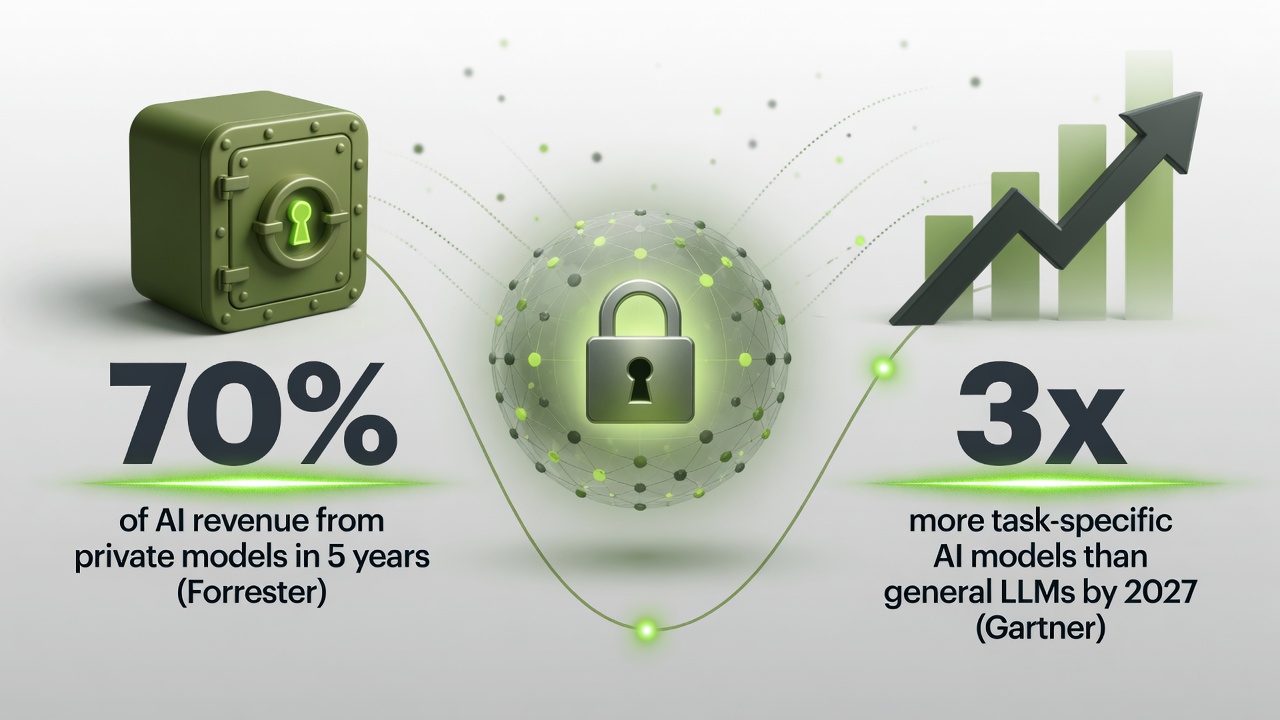
Forrester’s CEO has stated that within five years, 70% of the revenue created by AI will come from private models, not the public ones everyone knows. The reason is simple: trust. Sensitive customer records, operational data, pricing strategies, and brand voice do not belong in shared systems trained on the open internet.
Gartner predicts that by 2027 organizations will use small, task-specific AI models at least three times more than general-purpose large language models. Specialized models cost less to run, deliver higher accuracy on the work that actually drives revenue, and are far easier to control for privacy and compliance.
McKinsey’s ongoing work on agentic AI reinforces the same point. Generic generative AI often produces little measurable impact on the bottom line. The bigger gains come when systems can re-engineer workflows and improve through continuous feedback loops. Early results include 20–30% reductions in lead times, 5–10% cost improvements in key processes, conversion rate lifts of two to three times, and noticeably shorter customer service times.
These numbers are not theoretical. They reflect what happens when AI stops being a general tool and starts becoming a private system that learns from the specific business it serves.
ChatGPT, Claude, Gemini, and Copilot are excellent for broad productivity. They can draft content, summarize documents, and even handle multi-step tasks. Many now include agentic features that plan and act with less hand-holding.
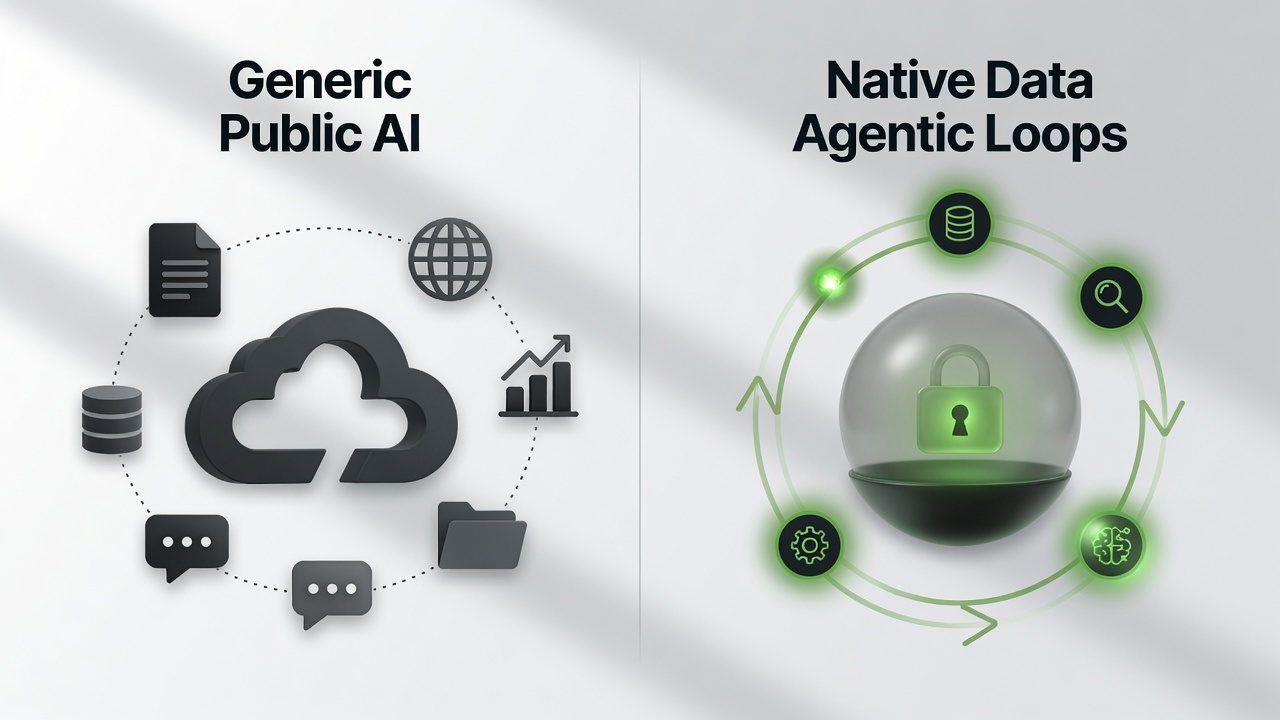
Yet for core business operations they share the same constraints:
They are trained primarily on public data. They do not deeply understand your customers, your processes, or your success metrics.
This is not a criticism of the tools. It is a recognition of their design. They were built to serve millions of users at once. Your business needs something that serves only you.
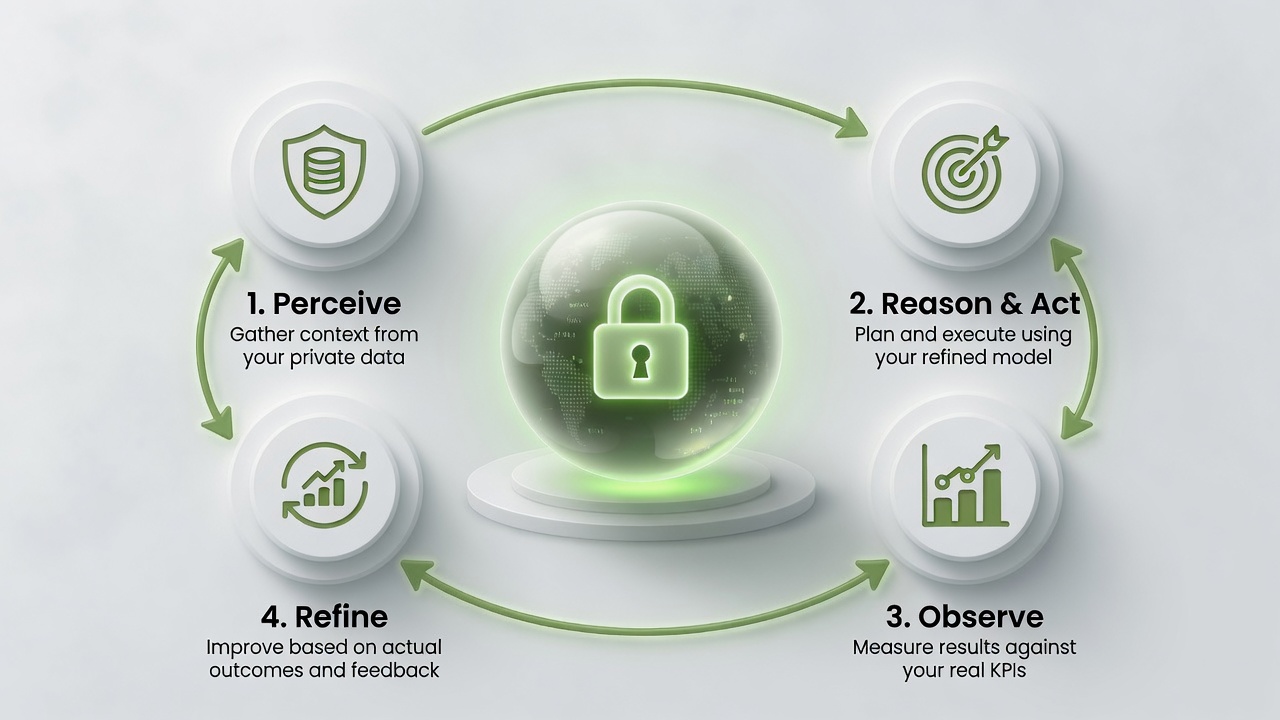
In mid-2026 the AI industry has been shifting focus from one-shot prompting to loop-based systems. Leading teams no longer just prompt models; they design cycles where agents repeatedly act, check results, and refine until goals are met. This “loop engineering” approach is what powers more autonomous and reliable agentic AI. When these loops run exclusively on a company’s native private data, the advantages compound dramatically.
Think of it as a disciplined cycle that never leaves your environment:
Over time the loops compound. The more the system is used on your data, the more relevant and reliable it becomes. McKinsey describes these feedback mechanisms as creating self-reinforcing systems: frequent, well-designed use makes the AI smarter and more aligned with the organization.
Importantly, this happens without exposing proprietary information outside your security boundary. The foundation may start with strong existing models, but the continuous refinement, memory, and improvement stay native to your data.
Many mid-sized organizations face the same barriers: limited specialized AI talent, tight budgets, and legitimate worries about data security and unpredictable costs. Public tools can help with individual productivity, but they rarely solve the deeper operational challenges.

Native-data agentic approaches change the equation:
This is not about removing people. It is about giving existing teams leverage that was previously available only to much larger organizations with big AI budgets.
Building sophisticated private systems from scratch has traditionally required significant investment in people, infrastructure, and time. That barrier is dropping.
An AIaaS model delivers private, native-data agentic loop capabilities as a managed service. Companies can start with focused use cases, see results in weeks rather than months, keep costs predictable, and avoid the need for a large internal AI team. The technical complexity of secure loops, continuous refinement, and data isolation is handled by specialists while the business team stays focused on outcomes.
Early adopters in mid-market segments are already seeing measurable gains in efficiency, customer response, and operational consistency — without the drama or the heavy fixed costs.
The research is consistent: most organizations are still experimenting with generic AI and seeing limited financial impact. A smaller group is moving to private, continuous systems that learn from their own operations. Those systems create advantages that compound. Once a competitor has a private loop running on their customer data and workflows, catching up becomes harder.

There is still widespread caution about AI, and that caution is healthy. The public conversation often focuses on replacement and risk. The more productive path for most businesses is careful, controlled, collaborative adoption that protects data, augments people, and delivers clear operational value. Native-data agentic loop training is designed for exactly that path.
The tools and approaches exist today. The question for most mid-market leaders is no longer whether private AI can work, but how quickly they can put a practical version to work on their own data before the gap with faster-moving competitors widens.
Ifyou would like to see how native-data agentic loops could apply to your specific operations, soolisAI offers free live demos. These sessions are practical walkthroughs focused on your data environment and priorities — no pressure, just clarity on what is possible and what the timeline and results typically look like.
The companies that treat AI as a private, continuously improving system rather than a generic utility are already building measurable advantages. Companies like soolisAI are helping mid-market organizations do exactly that — turning secure native-data agentic loops into practical, compounding value. The window to join them is still open.
Sources & Further Reading
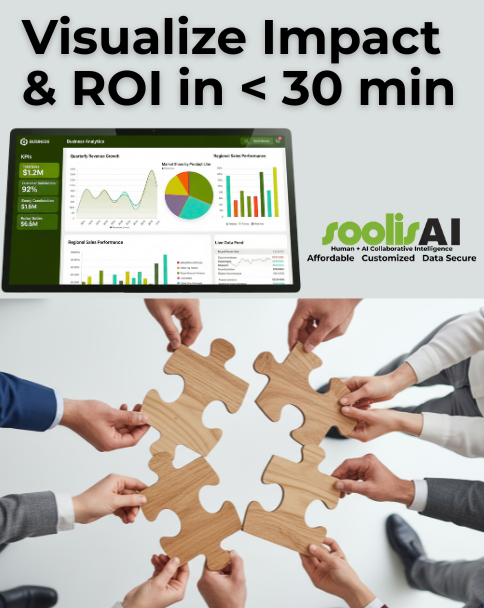
We value your time. Visualize the possibilities < 30 min!